---
title: Intensive Care Unit (ICU) Nurse Jobs, Outlook & Trends | HealthTrust
description: What can you expect from intensive care unit (ICU) nurse jobs? How are they different from critical care nursing jobs? Here's everything you need to know.
image: https://engage.healthtrustjobs.com/hubfs/intensive-care-unit-icu-nurse-jobs-outlook-trends.jpg
---
[](https://engage.healthtrustjobs.com/)
- [Careers Home](http://www.healthtrustjobs.com/)
- [Why HealthTrust](https://healthtrustjobs.com/why-healthtrust/)
- [Apply Instantly](https://healthtrustjobs.com/jobs/)
- Career Areas
- [Allied Health](https://healthtrustjobs.com/career-areas/allied-health/jobs/)
- [Corporate](https://careers.hcahealthcare.com/pages/healthtrust-workforce-solutions?bid=5260)
- [Interim Leaders](https://healthtrustjobs.com/career-areas/interim-leadership/jobs/)
- [Per Diem](https://healthtrustjobs.com/career-areas/per-diem/jobs/)
- [Local Contract](https://healthtrustjobs.com/career-areas/travel-local-contract/jobs/)
- [Perm Placement](https://healthtrustjobs.com/career-areas/permanent-placement/jobs/)
- [Locum Tenens](https://healthtrustjobs.com/career-areas/locum-tenens/jobs/)
- [Travel Nursing](https://healthtrustjobs.com/career-areas/travel-local-contract/jobs/)
- [Locations](https://healthtrustjobs.com/locations/)
- [HCA Healthcare Facility Spotlights](https://engage.healthtrustjobs.com/facility-spotlights)
- [Subscribe](https://engage.healthtrustjobs.com/healthtrust-newsletter-signup)
[](https://healthtrustws.com/jobs/search?discipline=nurse&specializations=Critical+Care&specializations=Bone+Marrow+Transplant+%28ICU%29&specializations=Burn+Unit+ICU&specializations=Cardiac+ICU&specializations=Pediatric+ICU+%28PICU%29&specializations=Medical+ICU+%28MICU%29&specializations=Neuro+ICU&specializations=Neonatal+ICU+%28NICU%29)
# Specialty Spotlight: Intensive Care Unit (ICU) Nurse Jobs, Outlook & Trends
- [Tweet](https://twitter.com/share)
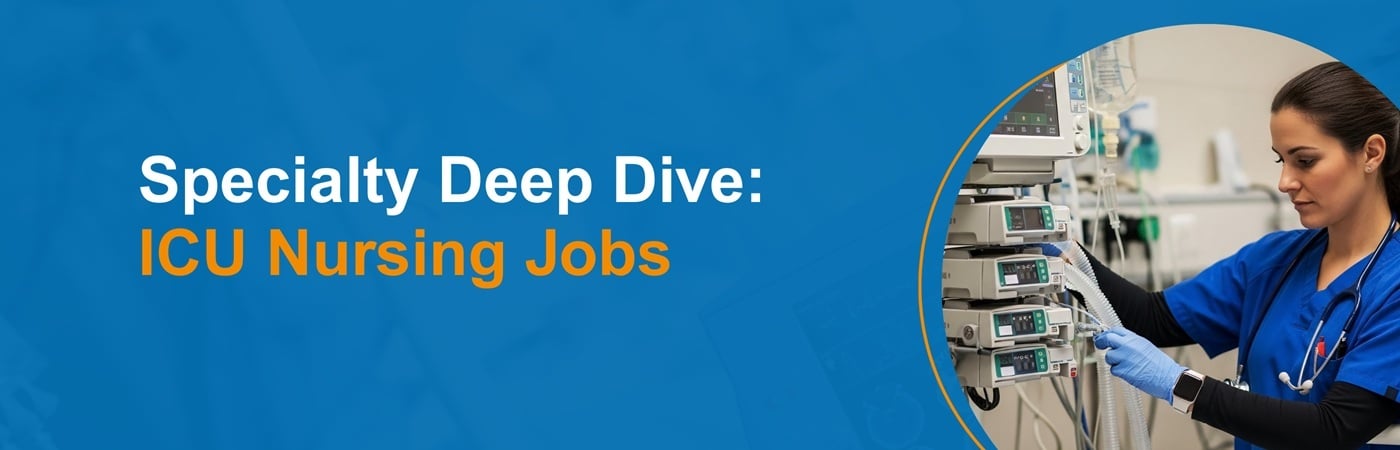
What can you expect from intensive care unit (ICU) nurse jobs? How are they different from critical care nursing jobs? From salary expectations to future job outlook to the best travel opportunities, Here's everything you need to know.
*> Ready for a new career opportunity? [Search ICU jobs here](https://healthtrustws.com/jobs/search?selectedJobId=6958406119872f3b84cd6849&discipline=nurse&specializations=Critical+Care&specializations=Bone+Marrow+Transplant+%28ICU%29&specializations=Burn+Unit+ICU&specializations=Cardiac+ICU&specializations=Pediatric+ICU+%28PICU%29&specializations=Medical+ICU+%28MICU%29&specializations=Neuro+ICU&specializations=Neonatal+ICU+%28NICU%29)*
## Guide to Intensive Care Unit (ICU) Nurse Jobs
ICU is an abbreviation for intensive care unit, and that’s exclusively where ICU nurses work — a dedicated part of a hospital or health center with the equipment, technology, and team to manage patients in critical condition.
- ***Good to know:** ICUs are sometimes also called critical care units (CCUs) or intensive treatment unit (ITU).*
### What's the difference between ICU and critical care?
Critical care nursing is a specialty that involves treating patients in critical and often life-threatening conditions. Critical care jobs are jobs in the critical care specialty, while ICU nursing jobs are jobs for critical care nurses in the intensive care unit.
Whether a job is listed as ICU or critical care, the basic duties will be the same — working to stabilize and support patients in critical conditions, like those just out of surgery, or who just had a serious injury, accident, or organ failure.
### What are the different settings of ICU nurse jobs?
There are several other more specialized settings where ICU nurses can also work.
- **Pediatric ICU (PICU)** nurse jobs work with babies, children, and teens
- **Neonatal ICU (NICU)** nurse jobs treat newborns
- **Cardiac/cardiovascular ICU (CVICU)** nurse jobs treat heart conditions
- **Neurological ICU (NICU)** nurse jobs treat brain and the nervous system
- **Surgical ICU (SICU)** nurse jobs care work with patients recovering from surgery
- **Trauma ICU (TIMU)** nurse jobs treat patients suffering from severe injuries
## ICU Nursing Jobs: What to Expect & Future Outlook
Like all critical care nurses, ICU nursing jobs involve treating patients in critical conditions and in need of continuous monitoring, both at a specialized level.
Intensive care unit nurse jobs also include general care like checking vitals, charting, providing medication, helping develop care plans, and assisting in medical procedures and exams. You may be responsible for coordinating care, or for overseeing clinicians, aides, or other nurses.
### What skills and qualifications do you need for ICU jobs?
Jobs in the ICU usually require a year or two of prior direct ICU experience or equivalent clinical training. This training can usually be earned in school or as a volunteer. Like any RN job, you’ll also need a valid license and an associate’s or bachelor’s degree in nursing -- usually the latter.
Patients in the ICU often require intensive interventions, so you’ll also need to be comfortable using the equipment needed to provided it. This can include ventilators, infusion pumps, hemodialysis machines, and defibrillators. You’ll also need to provide rapid response.
### What soft skills are important for ICU nursing jobs?
As the name suggests, intensive care can be intense! That makes it important for nurses to be able to communicate well with patients and families. Teamwork is also important for fast and effective interaction with doctors and other clinicians. Even more so than other nursing jobs, you’ll need to be able to respond quickly and make important decisions at a moment’s notice.
- ***What are the top 5 soft skills for nurses?** [Find out here](https://engage.healthtrustjobs.com/top-soft-skills-for-nurses)*
### What certifications do you need for ICU nursing jobs?
Most ICU nursing jobs on the HealthTrust jobsite require three main certifications:
- [Basic Life Support (BLS)](https://cpr.heart.org/en/cpr-courses-and-kits/healthcare-professional/basic-life-support-bls-training) from the American Heart Association (AHA)
- [Advanced Cardiovascular Life Support (ACLS)](https://cpr.heart.org/en/courses/advanced-cardiovascular-life-support-course-options) from the AHA
- [NIH Stroke Scale (NIHSS)](https://elearning.heart.org/course/989) certification from the AHA
In addition, earning other relevant [nursing certifications](https://engage.healthtrustjobs.com/best-nursing-certifications) could help your career, too — for instance:
- [Critical Care RN (CCRN)](https://www.aacn.org/certification/get-certified) from the American Association of Critical-Care Nurses (AACN)
- [Pediatric Advanced Life Support (PALS)](https://cpr.heart.org/en/courses/pals-course-options) from the AHA
### How much do ICU nurse jobs pay?
The average salary for RNs in the U.S. is [currently](https://www.bls.gov/ooh/healthcare/registered-nurses.htm) $93,600 per year, although that number changes depending on location, education, experience, and specialty — for instance, ICU nurses tend to make slightly more than other nurses. And among ICU nurses, trauma, neonatal, and surgical ICU jobs often pay even more.
And because demand for ICU nurses is high, you can expect that salary to increase in the years to come, making ICU a smart choice for nurses looking for a career with plenty of future opportunity.
- ***How much do ICU jobs pay right now?** [Browse open jobs](https://healthtrustws.com/jobs/search?discipline=nurse&specializations=Critical+Care&specializations=Bone+Marrow+Transplant+%28ICU%29&specializations=Burn+Unit+ICU&specializations=Cardiac+ICU&specializations=Pediatric+ICU+%28PICU%29&specializations=Medical+ICU+%28MICU%29&specializations=Neuro+ICU&specializations=Neonatal+ICU+%28NICU%29) and see for yourself!*
### Is ICU a good specialty for travel nurses?
In addition, travel nurses working in the ICU often earn more than full-time employees. Many of the intensive care unit jobs currently available at the [HealthTrust jobsite](https://healthtrustws.com/jobs/search?discipline=nurse&specializations=Critical+Care&specializations=Bone+Marrow+Transplant+(ICU)&specializations=Burn+Unit+ICU&specializations=Cardiac+ICU&specializations=Pediatric+ICU+(PICU)&specializations=Medical+ICU+(MICU)&specializations=Neuro+ICU&specializations=Neonatal+ICU+(NICU)) pay much more than 2,000 per week — or more than $100,000 per year on average — after adding in travel and [housing stipends](https://engage.healthtrustjobs.com/travel-nurse-housing-stipends-how-to-find).
Traveling also provides other way for nurses to earn — for instance, by living with a roommate to save more of your housing stipend. It also offers other career benefits, like the opportunity to build new skills and experience in new settings. Learn more about the [benefits of traveling here](https://engage.healthtrustjobs.com/benefits-of-being-a-travel-nurse).
## Find the Best ICU Nurse Jobs with HealthTrust!
As the country's leading source of career opportunities for nurses, we’re proud to offer exclusive ICU nursing jobs you won't find anywhere else, in some of America's top facilities. See what’s available — [search current openings here](https://healthtrustws.com/jobs/search?selectedJobId=6958406119872f3b84cd6849&discipline=nurse&specializations=Critical+Care&specializations=Bone+Marrow+Transplant+%28ICU%29&specializations=Burn+Unit+ICU&specializations=Cardiac+ICU&specializations=Pediatric+ICU+%28PICU%29&specializations=Medical+ICU+%28MICU%29&specializations=Neuro+ICU&specializations=Neonatal+ICU+%28NICU%29).
[Search ICU Nurse Jobs](https://healthtrustws.com/jobs/search?selectedJobId=6958406119872f3b84cd6849&discipline=nurse&specializations=Critical+Care&specializations=Bone+Marrow+Transplant+%28ICU%29&specializations=Burn+Unit+ICU&specializations=Cardiac+ICU&specializations=Pediatric+ICU+%28PICU%29&specializations=Medical+ICU+%28MICU%29&specializations=Neuro+ICU&specializations=Neonatal+ICU+%28NICU%29)
Topics: [Nursing](https://engage.healthtrustjobs.com/topic/nursing), [ICU](https://engage.healthtrustjobs.com/topic/icu), [Nursing Jobs](https://engage.healthtrustjobs.com/topic/nursing-jobs), [Specialty Spotlight](https://engage.healthtrustjobs.com/topic/specialty-spotlight)
### Recommended Posts
## ENGAGE
Engage is an emerging blog which features relevant, informative and engaging content designed to promote and advance the healthcare industry and the professionals who work within it.
### Recent Posts
### Posts by Topic
- [Healthcare (311)](https://engage.healthtrustjobs.com/topic/healthcare)
- [HealthTrust (242)](https://engage.healthtrustjobs.com/topic/healthtrust)
- [Healthcare Recruitment (159)](https://engage.healthtrustjobs.com/topic/healthcare-recruitment)
- [Nursing (157)](https://engage.healthtrustjobs.com/topic/nursing)
- [Jobs Report (63)](https://engage.healthtrustjobs.com/topic/jobs-report)
- [Events (51)](https://engage.healthtrustjobs.com/topic/events)
- [Coronavirus (50)](https://engage.healthtrustjobs.com/topic/coronavirus)
- [Nurse Appreciation (49)](https://engage.healthtrustjobs.com/topic/nurse-appreciation)
- [Corporate Social Responsibility (45)](https://engage.healthtrustjobs.com/topic/corporate-social-responsibility)
- [Employee Recognition (44)](https://engage.healthtrustjobs.com/topic/employee-recognition)
- [Travel Nursing (44)](https://engage.healthtrustjobs.com/topic/travel-nursing)
- [Health & Safety (43)](https://engage.healthtrustjobs.com/topic/health-safety)
- [Job Release (40)](https://engage.healthtrustjobs.com/topic/job-release)
- [DAISY Award (39)](https://engage.healthtrustjobs.com/topic/daisy-award)
- [Special Holiday Message (39)](https://engage.healthtrustjobs.com/topic/special-holiday-message)
- [Travel (38)](https://engage.healthtrustjobs.com/topic/travel)
- [Nursing Jobs (37)](https://engage.healthtrustjobs.com/topic/nursing-jobs)
- [Nurse Recognition (32)](https://engage.healthtrustjobs.com/topic/nurse-recognition)
- [Employee Appreciation (30)](https://engage.healthtrustjobs.com/topic/employee-appreciation)
- [Healthcare Jobs (29)](https://engage.healthtrustjobs.com/topic/healthcare-jobs)
- [Per Diem Nursing (29)](https://engage.healthtrustjobs.com/topic/per-diem-nursing)
- [HealthTrust Hero (28)](https://engage.healthtrustjobs.com/topic/healthtrust-hero)
- [HealthTrust Workforce Solutions (28)](https://engage.healthtrustjobs.com/topic/healthtrust-workforce-solutions)
- [Allied Health (26)](https://engage.healthtrustjobs.com/topic/allied-health)
- [Nurses Week (24)](https://engage.healthtrustjobs.com/topic/nurses-week)
- [Career Opportunities (23)](https://engage.healthtrustjobs.com/topic/career-opportunities)
- [Per Diem Jobs (22)](https://engage.healthtrustjobs.com/topic/per-diem-jobs)
- [Employee Spotlight (21)](https://engage.healthtrustjobs.com/topic/employee-spotlight)
- [Holiday (21)](https://engage.healthtrustjobs.com/topic/holiday)
- [Nursing Perspectives (21)](https://engage.healthtrustjobs.com/topic/nursing-perspectives)
- [StaRN (19)](https://engage.healthtrustjobs.com/topic/starn)
- [Nursing Leadership (18)](https://engage.healthtrustjobs.com/topic/nursing-leadership)
- [Thought Leadership (18)](https://engage.healthtrustjobs.com/topic/thought-leadership)
- [HCA Healthcare (15)](https://engage.healthtrustjobs.com/topic/hca-healthcare)
- [Lifestyle (15)](https://engage.healthtrustjobs.com/topic/lifestyle)
- [Dialysis (14)](https://engage.healthtrustjobs.com/topic/dialysis)
- [Awards (13)](https://engage.healthtrustjobs.com/topic/awards)
- [Career Spotlight (13)](https://engage.healthtrustjobs.com/topic/career-spotlight)
- [Nephrology (13)](https://engage.healthtrustjobs.com/topic/nephrology)
- [Go HWS Mobile App (12)](https://engage.healthtrustjobs.com/topic/go-hws-mobile-app)
- [Locum Tenens (12)](https://engage.healthtrustjobs.com/topic/locum-tenens)
- [Allied Jobs (11)](https://engage.healthtrustjobs.com/topic/allied-jobs)
- [Dialysis Jobs (11)](https://engage.healthtrustjobs.com/topic/dialysis-jobs)
- [conferences (11)](https://engage.healthtrustjobs.com/topic/conferences)
- [Facility Spotlight (10)](https://engage.healthtrustjobs.com/topic/facility-spotlight)
- [Nursing Shortage (10)](https://engage.healthtrustjobs.com/topic/nursing-shortage)
- [Jobsite (9)](https://engage.healthtrustjobs.com/topic/jobsite)
- [Nurses (9)](https://engage.healthtrustjobs.com/topic/nurses)
- [Allied Travel (8)](https://engage.healthtrustjobs.com/topic/allied-travel)
- [Disaster Response Team (8)](https://engage.healthtrustjobs.com/topic/disaster-response-team)
- [HCA (8)](https://engage.healthtrustjobs.com/topic/hca)
- [Nurse Spotlight (8)](https://engage.healthtrustjobs.com/topic/nurse-spotlight)
- [National Nurses Week (7)](https://engage.healthtrustjobs.com/topic/national-nurses-week)
- [Specialty Spotlight (7)](https://engage.healthtrustjobs.com/topic/specialty-spotlight)
- [Workplace Wellness (7)](https://engage.healthtrustjobs.com/topic/workplace-wellness)
- [Deals & Discounts (6)](https://engage.healthtrustjobs.com/topic/deals-discounts)
- [Respiratory Therapist (6)](https://engage.healthtrustjobs.com/topic/respiratory-therapist)
- [SIA (6)](https://engage.healthtrustjobs.com/topic/sia)
- [Thrive in the New Year (6)](https://engage.healthtrustjobs.com/topic/thrive-in-the-new-year)
- [VIP Program (6)](https://engage.healthtrustjobs.com/topic/vip-program)
- [COVID-19 (5)](https://engage.healthtrustjobs.com/topic/covid-19)
- [Local Contract (5)](https://engage.healthtrustjobs.com/topic/local-contract)
- [Per Diem (5)](https://engage.healthtrustjobs.com/topic/per-diem)
- [Celebrations (4)](https://engage.healthtrustjobs.com/topic/celebrations)
- [City Spotlight (4)](https://engage.healthtrustjobs.com/topic/city-spotlight)
- [Healthcare Staffing (4)](https://engage.healthtrustjobs.com/topic/healthcare-staffing)
- [Location Spotlight (4)](https://engage.healthtrustjobs.com/topic/location-spotlight)
- [Nurse Perspectives (4)](https://engage.healthtrustjobs.com/topic/nurse-perspectives)
- [Pay Transparency (4)](https://engage.healthtrustjobs.com/topic/pay-transparency)
- [Self-Care (4)](https://engage.healthtrustjobs.com/topic/self-care)
- [All Network Staff (3)](https://engage.healthtrustjobs.com/topic/all-network-staff)
- [Benefits (3)](https://engage.healthtrustjobs.com/topic/benefits)
- [Education (3)](https://engage.healthtrustjobs.com/topic/education)
- [Interview Tips (3)](https://engage.healthtrustjobs.com/topic/interview-tips)
- [New Jobs (3)](https://engage.healthtrustjobs.com/topic/new-jobs)
- [Nurse Licensure Compact (3)](https://engage.healthtrustjobs.com/topic/nurse-licensure-compact)
- [Physicians (3)](https://engage.healthtrustjobs.com/topic/physicians)
- [Referral Program (3)](https://engage.healthtrustjobs.com/topic/referral-program)
- [Resume Tips (3)](https://engage.healthtrustjobs.com/topic/resume-tips)
- [Top Destinations (3)](https://engage.healthtrustjobs.com/topic/top-destinations)
- [Vascular Access (3)](https://engage.healthtrustjobs.com/topic/vascular-access)
- [4th of July (2)](https://engage.healthtrustjobs.com/topic/4th-of-july)
- [ANNA (2)](https://engage.healthtrustjobs.com/topic/anna)
- [AONL (2)](https://engage.healthtrustjobs.com/topic/aonl)
- [Advanced Practice (2)](https://engage.healthtrustjobs.com/topic/advanced-practice)
- [All Nurses (2)](https://engage.healthtrustjobs.com/topic/all-nurses)
- [Announcements (2)](https://engage.healthtrustjobs.com/topic/announcements)
- [CNA (2)](https://engage.healthtrustjobs.com/topic/cna)
- [Career Guide (2)](https://engage.healthtrustjobs.com/topic/career-guide)
- [Career Milestones (2)](https://engage.healthtrustjobs.com/topic/career-milestones)
- [Colorado (2)](https://engage.healthtrustjobs.com/topic/colorado)
- [Doctors' Day (2)](https://engage.healthtrustjobs.com/topic/doctors-day)
- [Flexibility (2)](https://engage.healthtrustjobs.com/topic/flexibility)
- [Florida (2)](https://engage.healthtrustjobs.com/topic/florida)
- [Hospital Week (2)](https://engage.healthtrustjobs.com/topic/hospital-week)
- [ICU (2)](https://engage.healthtrustjobs.com/topic/icu)
- [Infographic (2)](https://engage.healthtrustjobs.com/topic/infographic)
- [Med/Surg (2)](https://engage.healthtrustjobs.com/topic/med-surg)
- [Mental Health Awareness (2)](https://engage.healthtrustjobs.com/topic/mental-health-awareness)
- [Mobile App (2)](https://engage.healthtrustjobs.com/topic/mobile-app)
- [PCU (2)](https://engage.healthtrustjobs.com/topic/pcu)
- [Physicians Week (2)](https://engage.healthtrustjobs.com/topic/physicians-week)
- [Powering Workforce Solutions (2)](https://engage.healthtrustjobs.com/topic/powering-workforce-solutions)
- [Professional Development (2)](https://engage.healthtrustjobs.com/topic/professional-development)
- [Relay for Life (2)](https://engage.healthtrustjobs.com/topic/relay-for-life)
- [Sarah Cannon (2)](https://engage.healthtrustjobs.com/topic/sarah-cannon)
- [Scheduling (2)](https://engage.healthtrustjobs.com/topic/scheduling)
- [Taxes (2)](https://engage.healthtrustjobs.com/topic/taxes)
- [Technician (2)](https://engage.healthtrustjobs.com/topic/technician)
- [Telemetry (2)](https://engage.healthtrustjobs.com/topic/telemetry)
- [Tennessee (2)](https://engage.healthtrustjobs.com/topic/tennessee)
- [Thanksgiving (2)](https://engage.healthtrustjobs.com/topic/thanksgiving)
- [TravCon (2)](https://engage.healthtrustjobs.com/topic/travcon)
- [VIP Member (2)](https://engage.healthtrustjobs.com/topic/vip-member)
- [inSight Advisory (2)](https://engage.healthtrustjobs.com/topic/insight-advisory)
- [AANA (1)](https://engage.healthtrustjobs.com/topic/aana)
- [ACEP (1)](https://engage.healthtrustjobs.com/topic/acep)
- [Apogee Awards (1)](https://engage.healthtrustjobs.com/topic/apogee-awards)
- [Austin (1)](https://engage.healthtrustjobs.com/topic/austin)
- [Breast Cancer Awareness (1)](https://engage.healthtrustjobs.com/topic/breast-cancer-awareness)
- [Burnout (1)](https://engage.healthtrustjobs.com/topic/burnout)
- [Certified Nurses Day (1)](https://engage.healthtrustjobs.com/topic/certified-nurses-day)
- [Clinical Connection Newsletter (1)](https://engage.healthtrustjobs.com/topic/clinical-connection-newsletter)
- [Corporate Jobs (1)](https://engage.healthtrustjobs.com/topic/corporate-jobs)
- [Corporate Recruiter (1)](https://engage.healthtrustjobs.com/topic/corporate-recruiter)
- [December (1)](https://engage.healthtrustjobs.com/topic/december)
- [Denver (1)](https://engage.healthtrustjobs.com/topic/denver)
- [Elevate Award (1)](https://engage.healthtrustjobs.com/topic/elevate-award)
- [Emergency Room (1)](https://engage.healthtrustjobs.com/topic/emergency-room)
- [Fall Respiratory Symptoms (1)](https://engage.healthtrustjobs.com/topic/fall-respiratory-symptoms)
- [February (1)](https://engage.healthtrustjobs.com/topic/february)
- [Flu (1)](https://engage.healthtrustjobs.com/topic/flu)
- [HCA Hope Fund (1)](https://engage.healthtrustjobs.com/topic/hca-hope-fund)
- [HealthTrust Hears You (1)](https://engage.healthtrustjobs.com/topic/healthtrust-hears-you)
- [Hiring Event (1)](https://engage.healthtrustjobs.com/topic/hiring-event)
- [Instructor (1)](https://engage.healthtrustjobs.com/topic/instructor)
- [Interim Leadership (1)](https://engage.healthtrustjobs.com/topic/interim-leadership)
- [Internship (1)](https://engage.healthtrustjobs.com/topic/internship)
- [Job Alerts (1)](https://engage.healthtrustjobs.com/topic/job-alerts)
- [Juneteenth (1)](https://engage.healthtrustjobs.com/topic/juneteenth)
- [Labor & Delivery (1)](https://engage.healthtrustjobs.com/topic/labor-delivery)
- [Lead Recruiter (1)](https://engage.healthtrustjobs.com/topic/lead-recruiter)
- [Living the Workforce Way (1)](https://engage.healthtrustjobs.com/topic/living-the-workforce-way)
- [Med Tech (1)](https://engage.healthtrustjobs.com/topic/med-tech)
- [New Hampshire (1)](https://engage.healthtrustjobs.com/topic/new-hampshire)
- [Nightingale Award (1)](https://engage.healthtrustjobs.com/topic/nightingale-award)
- [November (1)](https://engage.healthtrustjobs.com/topic/november)
- [Nurse Practitioner (1)](https://engage.healthtrustjobs.com/topic/nurse-practitioner)
- [October (1)](https://engage.healthtrustjobs.com/topic/october)
- [Oncology (1)](https://engage.healthtrustjobs.com/topic/oncology)
- [Parallon Gives Back (1)](https://engage.healthtrustjobs.com/topic/parallon-gives-back)
- [Per Diem Recruiter (1)](https://engage.healthtrustjobs.com/topic/per-diem-recruiter)
- [Physical Therapy (1)](https://engage.healthtrustjobs.com/topic/physical-therapy)
- [Promotion (1)](https://engage.healthtrustjobs.com/topic/promotion)
- [Recruiter (1)](https://engage.healthtrustjobs.com/topic/recruiter)
- [Regional Recruiter (1)](https://engage.healthtrustjobs.com/topic/regional-recruiter)
- [Resource Pool (1)](https://engage.healthtrustjobs.com/topic/resource-pool)
- [Skill Development (1)](https://engage.healthtrustjobs.com/topic/skill-development)
- [Staffing Industry Analysts (1)](https://engage.healthtrustjobs.com/topic/staffing-industry-analysts)
- [Texas (1)](https://engage.healthtrustjobs.com/topic/texas)
- [Top 5 (1)](https://engage.healthtrustjobs.com/topic/top-5)
- [Top Staffing Firms (1)](https://engage.healthtrustjobs.com/topic/top-staffing-firms)
- [Virginia (1)](https://engage.healthtrustjobs.com/topic/virginia)
- [Volunteers (1)](https://engage.healthtrustjobs.com/topic/volunteers)
- [auto booking (1)](https://engage.healthtrustjobs.com/topic/auto-booking)
- [direct booking (1)](https://engage.healthtrustjobs.com/topic/direct-booking)
- [fsa (1)](https://engage.healthtrustjobs.com/topic/fsa)
- [march (1)](https://engage.healthtrustjobs.com/topic/march)
- [nurse (1)](https://engage.healthtrustjobs.com/topic/nurse)
see all
[](https://healthtrustjobs.com/)
800-737-8661
[www.healthtrustjobs.com](http://www.healthtrustjobs.com)
Copyright © 2026 HealthTrust Workforce Solutions
### Careers
- [Careers Home](http://www.healthtrustjobs.com)
- [The HT Difference](https://healthtrustjobs.com/why-healthtrust/)
- [HealthTrust Ratings](https://engage.healthtrustjobs.com/healthtrust-ratings)
- [Locations](https://healthtrustjobs.com/locations/)
- [Events](https://engage.healthtrustjobs.com/topic/events)
- [Privacy Policy](https://healthtrustjobs.com/privacy-statement/)
### Choose A Journey
- [Allied Health Jobs](https://healthtrustjobs.com/career-areas/allied-health/jobs/?q=contract)
- [Corporate Jobs](https://careers.hcahealthcare.com/pages/healthtrust-workforce-solutions?bid=5260)
- [Interim Leadership](https://healthtrustjobs.com/career-areas/interim-leadership/jobs/)
- [Local Contract Jobs](https://healthtrustjobs.com/jobs/?q=contract)
- [Locum Tenens Jobs](https://healthtrustjobs.com/career-areas/locum-tenens/jobs/)
- [Per Diem Nursing Jobs](https://healthtrustjobs.com/jobs/?q=per+diem)
- [Permanent Placement](https://healthtrustjobs.com/career-areas/permanent-placement/jobs/)
- [Travel Nursing Jobs](https://healthtrustjobs.com/jobs/?q=travel)