
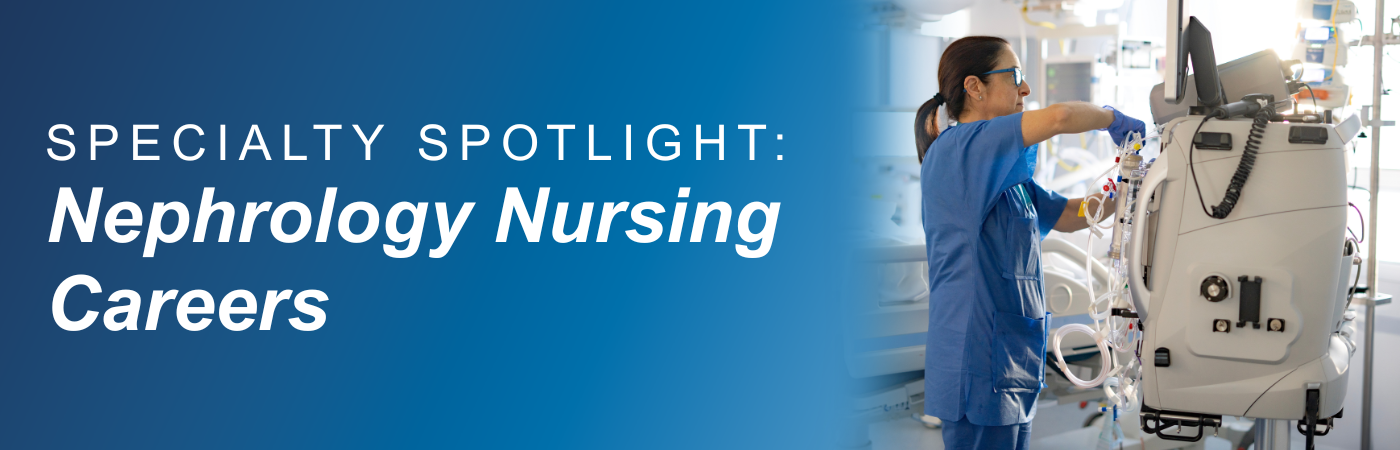
Nephrology is one of nursing’s most in-demand specialties. But what does it take to make nephrology nursing your career, and what can you expect in the years to come? From basic qualifications to future job outlook to travel and per diem opportunities and more, here's what you need to know.
> Ready for a new career opportunity? Search nephrology nurse jobs here
Quick Guide to Nephrology Nurse Jobs & Careers
Nephrology is a specialty where nurses provide care related to kidney health (also known as renal health). That usually means treating chronic kidney disease (CKD), as well as injuries and emergencies related to the kidneys, assisting with transplants, and providing long-term guidance for patients and families.
What are the responsibilities of a nephrology nurse?
Nephrology nurses carry out a wide range of tasks related to kidney health. This can include conducting general assessments, diagnosing conditions, developing treatment plans, monitoring progress, and educating patients and families.
Another duty in the nephrology specialty is administering dialysis care — in other words, using and managing dialysis equipment. However, dialysis nursing may also be considered a separate job.
What’s the difference between nephrology and dialysis?
While the nephrology specialty includes all aspects of kidney-related care, dialysis nurses specialize in the equipment needed for dialysis intervention, which is used to treat patients experiencing acute kidney distress or failure.
In other words, dialysis care is a type of nephrology — so, if you’re a dialysis nurse, you’re also a nephrology nurse. But the opposite may not be true, since a nephrology nurse may or may not need to manage dialysis equipment. It all depends on each individual job.
Where do nephrology nurses work?
Although they often work in hospitals (usually intensive care and dialysis units) and dialysis centers, nephrology and dialysis nurses are increasingly employed in other settings like acute care facilities, clinics, transplant centers, long-term care facilities, rehab centers, and home health settings.
How do you become a nephrology nurse?
Most nephrology nurses are RNs, so becoming one usually involves getting a degree (ADN or BSN) and then passing the NCLEX-RN exam to earn your license.
To land a job, you’ll probably need some hands-on experience, too — usually at least one year in a renal care setting. If you didn't get this in nursing school, you may be able to get it by volunteering, working as a per diem or float pool nurse with renal care duties, or joining an on-the-job training program.
- Good to know! HealthTrust's nephrology residency program offers specialized training in the skills, equipment, and day-to-day duties needed for dialysis care.
In addition to education, licensing, and clinical skills, you’ll also help your chances of getting hired by demonstrating important nursing soft skills like:
-
Communication and teamwork to collaborate with others
-
Patience and empathy for interacting with patients and families
-
Decision-making and the ability to perform well under pressure
What certifications do you need in nephrology nursing?
To land a job in nephrology nursing, you’ll also need some standard nursing certifications — usually Basic Life Support (BLS) and Advanced Cardiovascular Life Support (ACLS). It also helps to get other certifications in nephrology and dialysis like:
- Certified Nephrology Nurse® (CNN®) and/or Certified Dialysis Nurse® (CDN®) from the NNCC
- Certified Hemodialysis Nurse (CHN) and/or Certified Peritoneal Dialysis Nurse (CPDN) from BONENT
- Critical Care RN (CCRN) from the AACN
Nephrology Nurse Jobs: Future Career Outlook
What's the outlook for the nephrology specialty? In general, demand for RNs is growing at a “faster than average” rate in the U.S. And nephrology nursing is no exception, with jobs expected to increase for a number of reasons.
The number of people with kidney disease is rising sharply, meaning more patients will need to be treated in the years ahead. And that's because the general population of the U.S. is getting older, but also because our understanding of renal health has advanced so much in the past few decades.
How much do nephrology nurse jobs pay?
The average salary for RNs in the U.S. is $93,600 per year. Of course, how much you earn will depend on your specialty, location, education, experience, and the number of certifications you have. But as one of the most in-demand types of nurses, you can expect salaries for nephrology to increase in the years to come.
In addition, per diem and travel RNs can earn significantly more than the average rates. As of June, 2026, the HealthTrust jobsite shows per diem jobs that offer as much as $60.50 per hour with shift differentials for nights and weekends, and travel jobs that pay more than $2,000 per week including stipends.
Either of those options add up to well over $100,000 per year when worked full-time. Of course, one of the biggest benefits of travel and per diem jobs is that you don't have to work full-time, but on your own schedule. You can learn more about the benefits of traveling here, and the benefits of per diem jobs here.
Discover the Best Nephrology Nurse Jobs Now!
As the country's leading source of nursing careers, we’re proud to offer exclusive nephrology and dialysis nursing jobs you won't find anywhere else, in some of America's top facilities! Search current openings here to see what's available.