---
title: "How to Become a Vascular Access Nurse: Training, Certifications & More"
description: Here's everything you need to know about how to become a vascular access nurse, including certifications, training, and where to find the best jobs.
image: https://engage.healthtrustjobs.com/hubfs/how-to-become-a-vascular-access-nurse-training-certifications.jpg
---
[](https://engage.healthtrustjobs.com/)
- [Careers Home](http://www.healthtrustjobs.com/)
- [Why HealthTrust](https://healthtrustjobs.com/why-healthtrust/)
- [Apply Instantly](https://healthtrustjobs.com/jobs/)
- Career Areas
- [Allied Health](https://healthtrustjobs.com/career-areas/allied-health/jobs/)
- [Corporate](https://careers.hcahealthcare.com/pages/healthtrust-workforce-solutions?bid=5260)
- [Interim Leaders](https://healthtrustjobs.com/career-areas/interim-leadership/jobs/)
- [Per Diem](https://healthtrustjobs.com/career-areas/per-diem/jobs/)
- [Local Contract](https://healthtrustjobs.com/career-areas/travel-local-contract/jobs/)
- [Perm Placement](https://healthtrustjobs.com/career-areas/permanent-placement/jobs/)
- [Locum Tenens](https://healthtrustjobs.com/career-areas/locum-tenens/jobs/)
- [Travel Nursing](https://healthtrustjobs.com/career-areas/travel-local-contract/jobs/)
- [Locations](https://healthtrustjobs.com/locations/)
- [HCA Healthcare Facility Spotlights](https://engage.healthtrustjobs.com/facility-spotlights)
- [Subscribe](https://engage.healthtrustjobs.com/healthtrust-newsletter-signup)
[](https://healthtrustjobs.com/jobs/?q=vascular)
# How to Become a Vascular Access Nurse: Training, Certifications & More
- [Tweet](https://twitter.com/share)
It's one of today's top career choices for RNs. But where do you find vascular access nursing jobs, exactly? And how do you qualify for them? Here's what you should know about how to become a vascular access nurse, the certifications and training you need, and where to find the best job opportunities.
- *Looking for a new career path?* [Search vascular access RN jobs here](https://healthtrustjobs.com/career-areas/clinical-services/jobs/)
## How to Become a Vascular Access Nurse
More and more hospitals and care facilities are using dedicated nursing personnel to manage the use of intravenous (IV) lines, catheters, and similar procedures. And that makes vascular access a field with plenty of opportunities.
Whether you want to work in a field where there are always openings, or you're seeking a rewarding springboard to a further career in education or clinical management, you'll get it with vascular access nursing.
But if you're already working as a nurse, how can you [make the shift](https://engage.healthtrustjobs.com/how-to-change-nursing-specialties-tips) and enter this rapidly growing field? Here's a rundown of requirements and recommendations for how to become a vascular access nurse.
[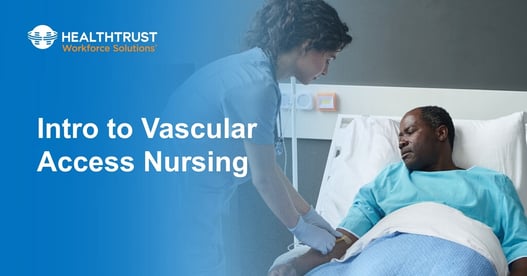](https://engage.healthtrustjobs.com/vascular-access-nursing-jobs)
*Got questions on vascular access basics? [Get answers here](https://engage.healthtrustjobs.com/vascular-access-nursing-jobs)*
### How can you qualify to become a vascular access nurse?
To work as a vascular access RN you'll need either an Associate's or Bachelor's degree (usually the latter) and a valid license to work as a registered nurse in your state.
- ***Did you know?** You can work in 40+ states with just one license with the NLC. [Learn more here](https://engage.healthtrustjobs.com/what-is-the-nurse-licensure-compact-nlc-how-to-apply).*
Although some employers may offer on-the-job training, you'll usually need to have some level of skill with the [many different types](https://engage.healthtrustjobs.com/vascular-access-nursing-jobs) of catheter and IV insertion devices — often a minimum of one year of experience. You'll also need some basic certifications like BCS and ACLS (see below).
### Vascular access nurse certification
What certifications do you need to work as a vascular access RN — and which ones are recommended to get the best, highest-paying jobs? Usually, you're required to have these baseline certifications:
- [**Basic Life Support (BLS)**](https://www.redcross.org/take-a-class/bls-training/bls-certification) from the American Heart Association (AHA)
- [**Advanced Cardiovascular Life Support (ACLS)**](https://cpr.heart.org/en/cpr-courses-and-kits/healthcare-professional/acls) from the AHA
- [**Pediatric Advanced Life Support (PALS)**](https://cpr.heart.org/en/courses/pals-course-options) from the AHA
You can take vascular access job skills even further with some more specialized certifications and show employers you’re up to speed on best practices to promote patient safety and quality care. It may even open new career opportunities!
- [Vascular Access-Board Certified™ (VA-BC™)](https://www.vacert.org/) from the Vascular Access Certification Corporation (VACC) is accredited by the National Commission for Certifying Agencies (NCCA) and ANCC Magnet-recognized
- [Certified registered nurse infusion (CRNI®)](https://www.ins1.org/crni/) from the Infusion Nurses Society (INS), accredited by the Accreditation Board for Specialty Nursing Certification (ABSNC) and the the NCCA.
You can see exactly what certifications are being asked for by browsing [vascular access job listings](https://healthtrustjobs.com/career-areas/clinical-services/jobs/) in the location where you want to work.
### Vascular access nurse training
How can get the training you need to work as a vascular access nurse? In addition to certifications, you can get essential vascular access training by:
- Earning [continuing education (CE) credits](https://engage.healthtrustjobs.com/navigating-nurse-continuing-education-ce) by taking courses specific to vascular access like device selection and CLABSI basics, or related areas like infection control. See other CE courses for vascular access nurses here, and learn more about leveraging CE to meet your goals [here](https://engage.healthtrustjobs.com/navigating-nurse-continuing-education-ce).
- Volunteering to provide vascular access services in your local community, at a local free clinic or another charitable organization like the [Red Cross](https://www.redcross.org/volunteer/volunteer-opportunities.html). It's a great way to build experience and boost the power of your resume.
- Joining organizations like [VACC](https://www.vacert.org/) or the [Association for Vascular Access (AVA)](https://www.avainfo.org/), where you'll find webinars, articles, annual meetings to attend, and lots more.
- [Watching webinars](https://education.healthtrustpg.com/calendar/) to keep up with clinical standards on infusion management and other related areas — many also offer CE credits
- Gaining the right clinical experience in other settings where IV line and catheter insertion happen regularly, like [med/surg departments](https://engage.healthtrustjobs.com/medical-surgical-med-surg-nursing-jobs-outlook-trends) or [the ICU](https://engage.healthtrustjobs.com/intensive-care-unit-icu-nurse-jobs-outlook-trends), and build skills in areas important to vascular access training like:
- Performing medical reviews and assessments
- Managing other nursing and clinical staff, including hiring and training
- Managing and organizing equipment, especially IV and catheter devices
- Gaining experience working with relevant EHRs and other common tech
- Reviewing metrics and preparing reports on clinical procedures
- Communicating quickly and effectively with doctors and other staff
## Ready to Apply? Search Vascular Access Jobs Now!
The most important part of how to become a vascular access nurse is finding the right job when you're ready to apply! And with HealthTrust, you'll get the best selection of [open jobs](https://healthtrustjobs.com/career-areas/clinical-services/jobs/), plus guaranteed hours, customizable pay packages, matching 401k, bonus referrals, and much more. See what's available [here](https://healthtrustjobs.com/career-areas/clinical-services/jobs/).
[Search Vascular Access Nurse Jobs](https://healthtrustjobs.com/career-areas/clinical-services/jobs/)
Topics: [Nursing Jobs](https://engage.healthtrustjobs.com/topic/nursing-jobs), [Vascular Access](https://engage.healthtrustjobs.com/topic/vascular-access)
### Recommended Posts
## ENGAGE
Engage is an emerging blog which features relevant, informative and engaging content designed to promote and advance the healthcare industry and the professionals who work within it.
### Recent Posts
### Posts by Topic
- [Healthcare (311)](https://engage.healthtrustjobs.com/topic/healthcare)
- [HealthTrust (242)](https://engage.healthtrustjobs.com/topic/healthtrust)
- [Healthcare Recruitment (159)](https://engage.healthtrustjobs.com/topic/healthcare-recruitment)
- [Nursing (157)](https://engage.healthtrustjobs.com/topic/nursing)
- [Jobs Report (63)](https://engage.healthtrustjobs.com/topic/jobs-report)
- [Events (51)](https://engage.healthtrustjobs.com/topic/events)
- [Coronavirus (50)](https://engage.healthtrustjobs.com/topic/coronavirus)
- [Nurse Appreciation (49)](https://engage.healthtrustjobs.com/topic/nurse-appreciation)
- [Corporate Social Responsibility (45)](https://engage.healthtrustjobs.com/topic/corporate-social-responsibility)
- [Employee Recognition (44)](https://engage.healthtrustjobs.com/topic/employee-recognition)
- [Travel Nursing (44)](https://engage.healthtrustjobs.com/topic/travel-nursing)
- [Health & Safety (43)](https://engage.healthtrustjobs.com/topic/health-safety)
- [Job Release (40)](https://engage.healthtrustjobs.com/topic/job-release)
- [DAISY Award (39)](https://engage.healthtrustjobs.com/topic/daisy-award)
- [Special Holiday Message (39)](https://engage.healthtrustjobs.com/topic/special-holiday-message)
- [Travel (38)](https://engage.healthtrustjobs.com/topic/travel)
- [Nursing Jobs (37)](https://engage.healthtrustjobs.com/topic/nursing-jobs)
- [Nurse Recognition (32)](https://engage.healthtrustjobs.com/topic/nurse-recognition)
- [Employee Appreciation (30)](https://engage.healthtrustjobs.com/topic/employee-appreciation)
- [Healthcare Jobs (29)](https://engage.healthtrustjobs.com/topic/healthcare-jobs)
- [Per Diem Nursing (29)](https://engage.healthtrustjobs.com/topic/per-diem-nursing)
- [HealthTrust Hero (28)](https://engage.healthtrustjobs.com/topic/healthtrust-hero)
- [HealthTrust Workforce Solutions (28)](https://engage.healthtrustjobs.com/topic/healthtrust-workforce-solutions)
- [Allied Health (26)](https://engage.healthtrustjobs.com/topic/allied-health)
- [Nurses Week (24)](https://engage.healthtrustjobs.com/topic/nurses-week)
- [Career Opportunities (23)](https://engage.healthtrustjobs.com/topic/career-opportunities)
- [Per Diem Jobs (22)](https://engage.healthtrustjobs.com/topic/per-diem-jobs)
- [Employee Spotlight (21)](https://engage.healthtrustjobs.com/topic/employee-spotlight)
- [Holiday (21)](https://engage.healthtrustjobs.com/topic/holiday)
- [Nursing Perspectives (21)](https://engage.healthtrustjobs.com/topic/nursing-perspectives)
- [StaRN (19)](https://engage.healthtrustjobs.com/topic/starn)
- [Nursing Leadership (18)](https://engage.healthtrustjobs.com/topic/nursing-leadership)
- [Thought Leadership (18)](https://engage.healthtrustjobs.com/topic/thought-leadership)
- [HCA Healthcare (15)](https://engage.healthtrustjobs.com/topic/hca-healthcare)
- [Lifestyle (15)](https://engage.healthtrustjobs.com/topic/lifestyle)
- [Dialysis (14)](https://engage.healthtrustjobs.com/topic/dialysis)
- [Awards (13)](https://engage.healthtrustjobs.com/topic/awards)
- [Career Spotlight (13)](https://engage.healthtrustjobs.com/topic/career-spotlight)
- [Nephrology (13)](https://engage.healthtrustjobs.com/topic/nephrology)
- [Go HWS Mobile App (12)](https://engage.healthtrustjobs.com/topic/go-hws-mobile-app)
- [Locum Tenens (12)](https://engage.healthtrustjobs.com/topic/locum-tenens)
- [Allied Jobs (11)](https://engage.healthtrustjobs.com/topic/allied-jobs)
- [Dialysis Jobs (11)](https://engage.healthtrustjobs.com/topic/dialysis-jobs)
- [conferences (11)](https://engage.healthtrustjobs.com/topic/conferences)
- [Facility Spotlight (10)](https://engage.healthtrustjobs.com/topic/facility-spotlight)
- [Nursing Shortage (10)](https://engage.healthtrustjobs.com/topic/nursing-shortage)
- [Jobsite (9)](https://engage.healthtrustjobs.com/topic/jobsite)
- [Nurses (9)](https://engage.healthtrustjobs.com/topic/nurses)
- [Allied Travel (8)](https://engage.healthtrustjobs.com/topic/allied-travel)
- [Disaster Response Team (8)](https://engage.healthtrustjobs.com/topic/disaster-response-team)
- [HCA (8)](https://engage.healthtrustjobs.com/topic/hca)
- [Nurse Spotlight (8)](https://engage.healthtrustjobs.com/topic/nurse-spotlight)
- [National Nurses Week (7)](https://engage.healthtrustjobs.com/topic/national-nurses-week)
- [Specialty Spotlight (7)](https://engage.healthtrustjobs.com/topic/specialty-spotlight)
- [Workplace Wellness (7)](https://engage.healthtrustjobs.com/topic/workplace-wellness)
- [Deals & Discounts (6)](https://engage.healthtrustjobs.com/topic/deals-discounts)
- [Respiratory Therapist (6)](https://engage.healthtrustjobs.com/topic/respiratory-therapist)
- [SIA (6)](https://engage.healthtrustjobs.com/topic/sia)
- [Thrive in the New Year (6)](https://engage.healthtrustjobs.com/topic/thrive-in-the-new-year)
- [VIP Program (6)](https://engage.healthtrustjobs.com/topic/vip-program)
- [COVID-19 (5)](https://engage.healthtrustjobs.com/topic/covid-19)
- [Local Contract (5)](https://engage.healthtrustjobs.com/topic/local-contract)
- [Per Diem (5)](https://engage.healthtrustjobs.com/topic/per-diem)
- [Celebrations (4)](https://engage.healthtrustjobs.com/topic/celebrations)
- [City Spotlight (4)](https://engage.healthtrustjobs.com/topic/city-spotlight)
- [Healthcare Staffing (4)](https://engage.healthtrustjobs.com/topic/healthcare-staffing)
- [Location Spotlight (4)](https://engage.healthtrustjobs.com/topic/location-spotlight)
- [Nurse Perspectives (4)](https://engage.healthtrustjobs.com/topic/nurse-perspectives)
- [Pay Transparency (4)](https://engage.healthtrustjobs.com/topic/pay-transparency)
- [Self-Care (4)](https://engage.healthtrustjobs.com/topic/self-care)
- [All Network Staff (3)](https://engage.healthtrustjobs.com/topic/all-network-staff)
- [Benefits (3)](https://engage.healthtrustjobs.com/topic/benefits)
- [Education (3)](https://engage.healthtrustjobs.com/topic/education)
- [Interview Tips (3)](https://engage.healthtrustjobs.com/topic/interview-tips)
- [New Jobs (3)](https://engage.healthtrustjobs.com/topic/new-jobs)
- [Nurse Licensure Compact (3)](https://engage.healthtrustjobs.com/topic/nurse-licensure-compact)
- [Physicians (3)](https://engage.healthtrustjobs.com/topic/physicians)
- [Referral Program (3)](https://engage.healthtrustjobs.com/topic/referral-program)
- [Resume Tips (3)](https://engage.healthtrustjobs.com/topic/resume-tips)
- [Top Destinations (3)](https://engage.healthtrustjobs.com/topic/top-destinations)
- [Vascular Access (3)](https://engage.healthtrustjobs.com/topic/vascular-access)
- [4th of July (2)](https://engage.healthtrustjobs.com/topic/4th-of-july)
- [ANNA (2)](https://engage.healthtrustjobs.com/topic/anna)
- [AONL (2)](https://engage.healthtrustjobs.com/topic/aonl)
- [Advanced Practice (2)](https://engage.healthtrustjobs.com/topic/advanced-practice)
- [All Nurses (2)](https://engage.healthtrustjobs.com/topic/all-nurses)
- [Announcements (2)](https://engage.healthtrustjobs.com/topic/announcements)
- [CNA (2)](https://engage.healthtrustjobs.com/topic/cna)
- [Career Guide (2)](https://engage.healthtrustjobs.com/topic/career-guide)
- [Career Milestones (2)](https://engage.healthtrustjobs.com/topic/career-milestones)
- [Colorado (2)](https://engage.healthtrustjobs.com/topic/colorado)
- [Doctors' Day (2)](https://engage.healthtrustjobs.com/topic/doctors-day)
- [Flexibility (2)](https://engage.healthtrustjobs.com/topic/flexibility)
- [Florida (2)](https://engage.healthtrustjobs.com/topic/florida)
- [Hospital Week (2)](https://engage.healthtrustjobs.com/topic/hospital-week)
- [ICU (2)](https://engage.healthtrustjobs.com/topic/icu)
- [Infographic (2)](https://engage.healthtrustjobs.com/topic/infographic)
- [Med/Surg (2)](https://engage.healthtrustjobs.com/topic/med-surg)
- [Mental Health Awareness (2)](https://engage.healthtrustjobs.com/topic/mental-health-awareness)
- [Mobile App (2)](https://engage.healthtrustjobs.com/topic/mobile-app)
- [PCU (2)](https://engage.healthtrustjobs.com/topic/pcu)
- [Physicians Week (2)](https://engage.healthtrustjobs.com/topic/physicians-week)
- [Powering Workforce Solutions (2)](https://engage.healthtrustjobs.com/topic/powering-workforce-solutions)
- [Professional Development (2)](https://engage.healthtrustjobs.com/topic/professional-development)
- [Relay for Life (2)](https://engage.healthtrustjobs.com/topic/relay-for-life)
- [Sarah Cannon (2)](https://engage.healthtrustjobs.com/topic/sarah-cannon)
- [Scheduling (2)](https://engage.healthtrustjobs.com/topic/scheduling)
- [Taxes (2)](https://engage.healthtrustjobs.com/topic/taxes)
- [Technician (2)](https://engage.healthtrustjobs.com/topic/technician)
- [Telemetry (2)](https://engage.healthtrustjobs.com/topic/telemetry)
- [Tennessee (2)](https://engage.healthtrustjobs.com/topic/tennessee)
- [Thanksgiving (2)](https://engage.healthtrustjobs.com/topic/thanksgiving)
- [TravCon (2)](https://engage.healthtrustjobs.com/topic/travcon)
- [VIP Member (2)](https://engage.healthtrustjobs.com/topic/vip-member)
- [inSight Advisory (2)](https://engage.healthtrustjobs.com/topic/insight-advisory)
- [AANA (1)](https://engage.healthtrustjobs.com/topic/aana)
- [ACEP (1)](https://engage.healthtrustjobs.com/topic/acep)
- [Apogee Awards (1)](https://engage.healthtrustjobs.com/topic/apogee-awards)
- [Austin (1)](https://engage.healthtrustjobs.com/topic/austin)
- [Breast Cancer Awareness (1)](https://engage.healthtrustjobs.com/topic/breast-cancer-awareness)
- [Burnout (1)](https://engage.healthtrustjobs.com/topic/burnout)
- [Certified Nurses Day (1)](https://engage.healthtrustjobs.com/topic/certified-nurses-day)
- [Clinical Connection Newsletter (1)](https://engage.healthtrustjobs.com/topic/clinical-connection-newsletter)
- [Corporate Jobs (1)](https://engage.healthtrustjobs.com/topic/corporate-jobs)
- [Corporate Recruiter (1)](https://engage.healthtrustjobs.com/topic/corporate-recruiter)
- [December (1)](https://engage.healthtrustjobs.com/topic/december)
- [Denver (1)](https://engage.healthtrustjobs.com/topic/denver)
- [Elevate Award (1)](https://engage.healthtrustjobs.com/topic/elevate-award)
- [Emergency Room (1)](https://engage.healthtrustjobs.com/topic/emergency-room)
- [Fall Respiratory Symptoms (1)](https://engage.healthtrustjobs.com/topic/fall-respiratory-symptoms)
- [February (1)](https://engage.healthtrustjobs.com/topic/february)
- [Flu (1)](https://engage.healthtrustjobs.com/topic/flu)
- [HCA Hope Fund (1)](https://engage.healthtrustjobs.com/topic/hca-hope-fund)
- [HealthTrust Hears You (1)](https://engage.healthtrustjobs.com/topic/healthtrust-hears-you)
- [Hiring Event (1)](https://engage.healthtrustjobs.com/topic/hiring-event)
- [Instructor (1)](https://engage.healthtrustjobs.com/topic/instructor)
- [Interim Leadership (1)](https://engage.healthtrustjobs.com/topic/interim-leadership)
- [Internship (1)](https://engage.healthtrustjobs.com/topic/internship)
- [Job Alerts (1)](https://engage.healthtrustjobs.com/topic/job-alerts)
- [Juneteenth (1)](https://engage.healthtrustjobs.com/topic/juneteenth)
- [Labor & Delivery (1)](https://engage.healthtrustjobs.com/topic/labor-delivery)
- [Lead Recruiter (1)](https://engage.healthtrustjobs.com/topic/lead-recruiter)
- [Living the Workforce Way (1)](https://engage.healthtrustjobs.com/topic/living-the-workforce-way)
- [Med Tech (1)](https://engage.healthtrustjobs.com/topic/med-tech)
- [New Hampshire (1)](https://engage.healthtrustjobs.com/topic/new-hampshire)
- [Nightingale Award (1)](https://engage.healthtrustjobs.com/topic/nightingale-award)
- [November (1)](https://engage.healthtrustjobs.com/topic/november)
- [Nurse Practitioner (1)](https://engage.healthtrustjobs.com/topic/nurse-practitioner)
- [October (1)](https://engage.healthtrustjobs.com/topic/october)
- [Oncology (1)](https://engage.healthtrustjobs.com/topic/oncology)
- [Parallon Gives Back (1)](https://engage.healthtrustjobs.com/topic/parallon-gives-back)
- [Per Diem Recruiter (1)](https://engage.healthtrustjobs.com/topic/per-diem-recruiter)
- [Physical Therapy (1)](https://engage.healthtrustjobs.com/topic/physical-therapy)
- [Promotion (1)](https://engage.healthtrustjobs.com/topic/promotion)
- [Recruiter (1)](https://engage.healthtrustjobs.com/topic/recruiter)
- [Regional Recruiter (1)](https://engage.healthtrustjobs.com/topic/regional-recruiter)
- [Resource Pool (1)](https://engage.healthtrustjobs.com/topic/resource-pool)
- [Skill Development (1)](https://engage.healthtrustjobs.com/topic/skill-development)
- [Staffing Industry Analysts (1)](https://engage.healthtrustjobs.com/topic/staffing-industry-analysts)
- [Texas (1)](https://engage.healthtrustjobs.com/topic/texas)
- [Top 5 (1)](https://engage.healthtrustjobs.com/topic/top-5)
- [Top Staffing Firms (1)](https://engage.healthtrustjobs.com/topic/top-staffing-firms)
- [Virginia (1)](https://engage.healthtrustjobs.com/topic/virginia)
- [Volunteers (1)](https://engage.healthtrustjobs.com/topic/volunteers)
- [auto booking (1)](https://engage.healthtrustjobs.com/topic/auto-booking)
- [direct booking (1)](https://engage.healthtrustjobs.com/topic/direct-booking)
- [fsa (1)](https://engage.healthtrustjobs.com/topic/fsa)
- [march (1)](https://engage.healthtrustjobs.com/topic/march)
- [nurse (1)](https://engage.healthtrustjobs.com/topic/nurse)
see all
[](https://healthtrustjobs.com/)
800-737-8661
[www.healthtrustjobs.com](http://www.healthtrustjobs.com)
Copyright © 2026 HealthTrust Workforce Solutions
### Careers
- [Careers Home](http://www.healthtrustjobs.com)
- [The HT Difference](https://healthtrustjobs.com/why-healthtrust/)
- [HealthTrust Ratings](https://engage.healthtrustjobs.com/healthtrust-ratings)
- [Locations](https://healthtrustjobs.com/locations/)
- [Events](https://engage.healthtrustjobs.com/topic/events)
- [Privacy Policy](https://healthtrustjobs.com/privacy-statement/)
### Choose A Journey
- [Allied Health Jobs](https://healthtrustjobs.com/career-areas/allied-health/jobs/?q=contract)
- [Corporate Jobs](https://careers.hcahealthcare.com/pages/healthtrust-workforce-solutions?bid=5260)
- [Interim Leadership](https://healthtrustjobs.com/career-areas/interim-leadership/jobs/)
- [Local Contract Jobs](https://healthtrustjobs.com/jobs/?q=contract)
- [Locum Tenens Jobs](https://healthtrustjobs.com/career-areas/locum-tenens/jobs/)
- [Per Diem Nursing Jobs](https://healthtrustjobs.com/jobs/?q=per+diem)
- [Permanent Placement](https://healthtrustjobs.com/career-areas/permanent-placement/jobs/)
- [Travel Nursing Jobs](https://healthtrustjobs.com/jobs/?q=travel)